.jpg)
ASSESSMENT BASED CARE FOR LEG PAIN, NERVE IRRITATION, AND RECURRING LOW BACK SYMPTOMS
Sciatica Treatment in Waterdown
Sciatica is not just “tight muscles.” Leg pain, burning, tingling, numbness, or pain that travels from the back into the glute, thigh, calf, or foot often needs a more specific approach.
With James Noordam, McGill Method care starts by understanding what is irritating your symptoms — then building a clear plan to reduce sensitivity, improve movement, and help you return to daily life, work, sport, and training with more confidence.
✔ Assessment-based treatment
✔ McGill Method Provider
✔ Kinesiology & Biomechanics background
✔ Massage therapy, movement coaching, and education
✔ Clear plan instead of guesswork


This is for you if:
✔ You have pain travelling into the glute, hip, thigh, calf, or foot
✔ Sitting, bending, coughing, lifting, or driving makes symptoms worse
✔ You have numbness, tingling, burning, or nerve-like pain
✔ Your back pain keeps coming back
✔ You were told you may have a disc bulge, disc herniation, or sciatica
✔ Massage, stretching, physio, chiro, or exercises have only helped temporarily
✔ You want a clearer explanation of what to do and what to avoid
If you have progressive weakness, loss of bladder or bowel control, saddle numbness, or rapidly worsening neurological symptoms, seek urgent medical care.
Sciatica is a symptom — not a diagnosis
Sciatica describes pain or nerve symptoms that travel down the leg. The important question is not just “Do you have sciatica?”
The better question is:
What is irritating the nerve, and what can we change to calm it down?
For some people, symptoms are related to disc irritation. For others, symptoms are influenced by spinal position, hip mechanics, muscle guarding, load sensitivity, prolonged sitting, or repeated movement patterns.
That is why treatment should not be random. The goal is to identify your triggers, reduce irritation, and build a plan that matches how your symptoms behave.


Common signs we assess
This appointment is designed for people dealing with recurring, persistent, or movement sensitive nerve or back pain.

Pain below the knee
Pain travelling into the calf or foot may suggest nerve involvement

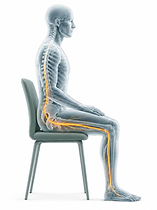
Pain with sitting or driving
Some disc and nerve related symptoms are aggravated by flexed or compressed positions.
Pain with bending or lifting
Repeated bending, poor bracing, or load sensitivity can keep symptoms irritated


Burning, tingling, or numbness
Nerve symptoms often feel different than normal muscle soreness

Symptoms that move location
Symptoms may centralize or peripheralize depending on position and movement.

Recurring flare-ups
If symptoms keep coming back, the issue may be more about triggers, tolerance, and movement strategy than one tight muscle.
The biomechanics approach
James combines massage therapy, kinesiology, biomechanics, and McGill Method principles to assess how your back and nerve symptoms respond to movement, position, and load.
The goal is not to force painful stretching or chase symptoms endlessly. The goal is to understand what your body is sensitive to, calm the irritated system down, and build capacity progressively.
1. Assess
We look at your history, symptom behaviour, movement patterns, and positions that aggravate or relieve your pain.
2. Calm
Treatment and education are used to reduce irritation and help you find positions and strategies that settle symptoms.
3. Rebuild
You are given specific movement strategies and exercises to restore control, strength, and confidence.
4. Progress
As symptoms improve, we build tolerance for work, training, sport, lifting, and daily life.
What treatment may include
✔ Hands-on massage therapy to reduce protective muscle tone and improve comfort
✔ Education on positions, movements, and loads that may be aggravating symptoms
✔ McGill Method-informed spine hygiene strategies
✔ Hip, pelvis, and spine movement assessment
✔ Nerve-friendly movement options when appropriate
✔ Core endurance and control progressions
✔ Return-to-lifting, work, sport, or training modifications
✔ A practical home plan you can actually follow
Treatment is always based on your presentation, consent, and clinical findings. No single technique or exercise is appropriate for everyone.


Why stretching may not be the answer
Many people with sciatica are told to stretch the hamstrings, glutes, or piriformis. Sometimes that helps. Sometimes it makes things worse.
If a nerve is already irritated, aggressive stretching can increase sensitivity. If your symptoms are disc or position-sensitive, the priority may be reducing irritation first — not forcing more range of motion.
The right plan depends on how your symptoms behave.
McGill Method-informed care for back pain and sciatica
The McGill Method focuses on understanding the specific pain triggers involved in each back pain presentation. Instead of using the same exercises for everyone, the approach looks at how symptoms respond to posture, movement, repeated loading, and daily habits.
For sciatica and disc-related pain, this may include identifying positions that worsen symptoms, finding movements that reduce irritation, and building spine-sparing strategies before progressing into strength and activity.
James uses this framework alongside his background in massage therapy and kinesiology.
What to expect at your first appointment
Your first visit is designed to give you clarity.
We will review your history, symptoms, daily triggers, training demands, work positions, and previous treatments. Then we assess how your back, hips, and symptoms respond to movement, position, and load.
You will leave with a clearer understanding of what may be contributing to your symptoms, what to avoid for now, what to start doing, and how treatment will progress.
Sciatica-related concerns we help assess
✔ Sciatica
✔ Disc herniation symptoms
✔ Disc bulge-related pain
✔ Low back pain with leg pain
✔ Glute pain with nerve symptoms
✔ Pain with sitting
✔ Pain with bending
✔ Pain with lifting
✔ Numbness or tingling in the leg
✔ Recurring back pain flare-ups
Questions About Sciatica-Related Symptoms
Can massage therapy help sciatica? Massage therapy may help reduce muscle guarding, improve comfort, and support movement, but sciatica usually needs more than passive treatment alone. James combines hands-on care with assessment, education, and movement strategies.
Is sciatica always caused by a disc herniation? No. Disc irritation can contribute to sciatica, but leg symptoms may also be influenced by spinal position, nerve sensitivity, hip mechanics, muscle guarding, or other factors.
Should I stretch my sciatic pain? Stretching recommendations depend on your symptoms and assessment. Avoid forcing movements that increase or spread symptoms, and discuss these responses with your treating healthcare professional.
How many visits will I need? That depends on your symptoms, irritability, history, goals, and how your body responds. The focus is to give you a clear plan and reduce dependency on passive care.
Do I need imaging first? Not always. Many cases can be assessed conservatively. If your presentation suggests medical referral or imaging is appropriate, James will recommend that you follow up with the appropriate healthcare provider.
Why does my sciatica keep coming back? Recurring sciatica often means something in your daily movement, posture, training, work demands, or loading tolerance may still be aggravating symptoms. For some people this is related to prolonged sitting, repeated bending, lifting mechanics, deconditioning, or recurring irritation of a sensitive structure. The goal is not just short-term symptom relief — it is understanding what may be contributing to flare-ups and building a plan to improve long-term tolerance and resilience.
Should I walk with sciatica? Walking is often helpful, but the right amount depends on your symptoms. Some people feel better with shorter, more frequent walks, while others may notice symptoms increase if walking volume is too high too early. The goal is to find an amount your body tolerates and gradually build from there. During your assessment, James will help determine what activity level makes sense for your presentation.
When should I get sciatica assessed? If your symptoms are persistent, worsening, interfering with sleep, affecting work or activity, or repeatedly returning, it may be worth getting assessed. Earlier assessment can sometimes help identify aggravating factors, improve symptom management, and provide a clearer plan for moving forward. If symptoms suggest medical referral is appropriate, James will recommend follow-up with the appropriate healthcare provider.

Discuss Your Sciatica-Related Symptoms
Book an assessment with James Noordam, RMT at Rockhaven Massage Therapy & Osteopathy in Waterdown. Get clarity. Calm the irritation. Build a plan that makes sense.
✓ New patients welcome ✓ Receipts provided ✓ No referral needed ✓ Flexible scheduling available
Learn more about care for: Back Pain | Sciatica | TMJ | Disc Herniation